
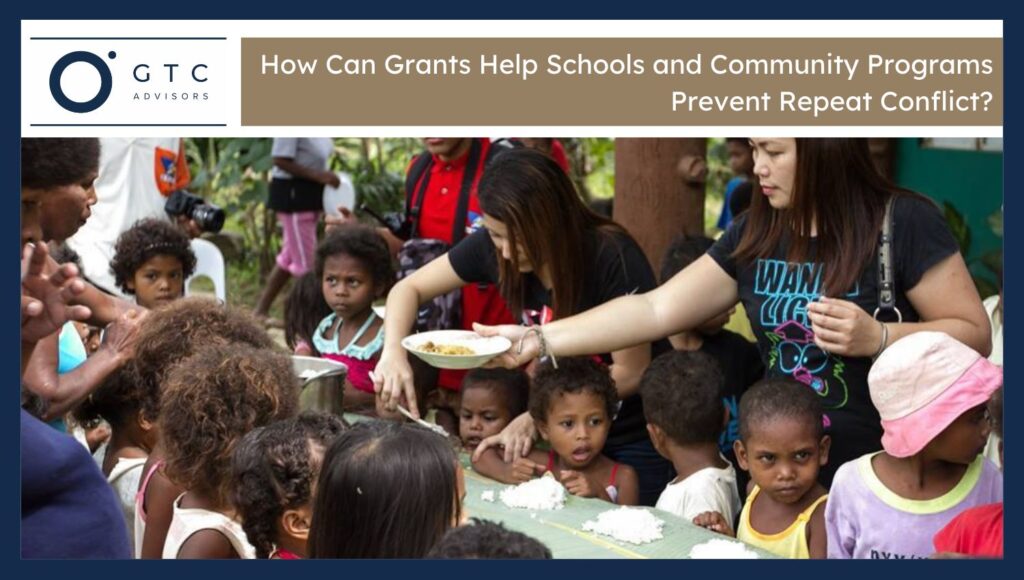
Grants help schools and community programs build sustainable systems to prevent recurring conflict. Informal discussions and single mediation sessions cannot resolve issues when programs lack follow-up or don’t address ongoing triggers. Funding supplements case screening, supports appropriate resolution processes, trains facilitators, establishes clear agreements, and enables ongoing evaluation. These resources are available to schools, youth programs, non-profits, community organizations, and neighborhood groups to help them manage frequent conflicts more effectively. The objective is not just to simply get more mediation sessions or workshops. It is meant to reduce potential future conflict, keep participants safe, and deliver achievable, sustainable results.
Which Recurring Conflicts Should the Grant-Funded Program Be Designed to Interrupt?
The first step in a grant-funded program should be to determine which conflicts keep happening and make relationships, participation, or daily activities difficult. These include conflicts with peers, within teams, communication problems, with neighbors, with family, or between program participants. Review Discipline Referrals, Staff Observations, Mediation Requests, Resident Complaints, Incident Notes, and Participant Feedback to determine whether a pattern is present. They must also learn to recognize the root causes of future conflicts, such as unclear expectations, shared space issues, role confusion, rumors, scheduling, and boundary violations. Threats, abuse, serious harassment, criminal behavior, and concerns about protection and safety need to be responded to formally or in a special way. Resolution needs to be measurable and defined in the project, and should result in a workable agreement, restored participation, safer communication, or fewer repeat incidents.
How Should Different Conflict Patterns Be Routed to the Right Resolution Process?
Here are the 6 Different Conflict Patterns to be Routed to the Right Resolution Process:
- Two-Party Disputes: Structured mediation works when there is a clear disagreement between two individuals, they are both willing to attend, and there is a reasonable chance of reaching an agreement.
- Ongoing Group Tension: Facilitated dialogue has proven useful when multiple people have conflicting opinions or recurring misunderstandings within a group. A facilitator assists participants to discuss concerns and clarify mutual expectations.
- Harm Where Relationship Repair Is Possible: Restorative circles or conferences give participants a chance to learn about the effects of harm, discuss repair, and commit to restoring participation. These processes depend on the voluntary participation and proper case screening.
- Practical Disagreements: Focused problem-solving conferences address a specific issue around schedules, shared resources, responsibilities, boundaries, expectations, or operating rules. The outcome makes it clear what the participants agree to change.
- Repeat Conflict After a Prior Agreement: Programs should review what went wrong with the previous agreement and identify the trigger point that isn’t being addressed. An alternative facilitator, alternative commitments, firmer boundaries, or a different response is better than repeating the same session.
- Unequal Authority: A trained adult or professional facilitator should handle cases involving major differences in age, status, authority, or role when peer mediation is inappropriate. The process should not pressure participants or allow unfair deals.
How Should Programs Decide What Can Be Mediated and What Must Be Escalated?
Programs need clear screening rules before placing a mediator. Participation should be voluntary, and neither party should be coerced into an agreement. Facilitators should consider whether intimidation, retaliation, abuse, or a serious power imbalance makes the process unsafe or unfair. Threats, violence, abuse, serious harassment, criminal behavior, safeguarding concerns and other serious issues must be dealt with formally or in a more specialist way and not through informal mediation. A trained individual must examine each case before a session begins to decide whether mediation is suitable. There should also be rules for program escalation, who to call for referral, the documentation needed, and what to do after referral. Using mediation as a substitute does not relieve an organization of its responsibility to investigate or report serious misconduct.
What Training and Supervision Do Peer Mediators, Staff, and Community Facilitators Need?
Facilitators should receive practical training to handle any conflict consistently and fairly. Training includes an introduction to opening a session, setting ground rules, outlining the issue, identifying participants’ interests, considering impact, brainstorming options, summarising agreements, and closing the process. Facilitators maintain neutrality through listening skills, paraphrasing, open questions, reframing, emotional regulation, and handling interruptions. Peer mediators, volunteers, teachers, staff, and professional facilitators must also understand their roles and boundaries. They learn through role play and supervised simulated scenarios, then work through authentic scenarios independently. Continuous coaching, debriefing and case review, observation, and refresher sessions keep the team ready. Supervisors should also instruct facilitators on when to stop a session, ask for assistance, assign a case to another supervisor, or refer it to a formal process.
How Can a Conflict-Resolution Program Become Trusted and Easy to Use Before Disputes Escalate?
A trusted program requires a clear, well-understood entry point and process. Students, families, staff, residents, and community members should know how to seek assistance and what to expect if they file a concern. Programs must include information on who is responsible for running the program, the voluntary nature of participation, privacy of information, and situations that will be referred to other programs before participating. Neutrality also matters because the same individual is tasked with investigating, disciplining, advocating on behalf of one party, and serving as an impartial mediator in the same case. It is not advisable to place these duties on the same person. Programs should address access barriers related to language, disability, scheduling, transportation, digital access, and age. Guide teachers, counselors, coaches, program staff, and resident leaders on identifying appropriate cases and making timely referrals. It is also important to analyze environments where conflicts recur,r but few people ask for mediation, as low use rates reflect a lack of awareness, access, or trust.
How Should Agreements Be Written and Followed Up So the Same Conflict Does Not Return?
Agreements should be specific, not vague promises of good behavior. Commitments must specify who will do what, when, and under which circumstances. Other agreements include recurring triggers, such as shared-space rules, communication, schedules, group roles, boundaries, and escalation steps. Participants should NOT be given tasks that require resources, authority, or decisions beyond their control. A follow-up point is used to see whether the agreement works in real-life scenarios. Programs should outline consequences for non-compliance, such as returning to mediation, referral to a supervisor, or a formal process. You cannot resolve a conflict with a signed document. Organizations should close a case only if follow-up indicates the conflict has settled and is unlikely to recur.
How Should Conflict-Resolution Cases Be Documented Without Undermining Privacy, Trust, or Safety?
Document only the information necessary to manage cases and assess the program. Records do not need to document every word spoken in a session, but include intake, screening, facilitator assignment, outcomes, follow-up, and repeat-conflict information. Keep mediation records in a separate form when formal disciplinary, safeguarding, legal, or investigative proceedings have different purposes and access to records. Facilitators should explain confidentiality boundaries to participants before participation, including information that must be shared for safety or legal reasons and who will have access to program records. Organizations should limit access, have proper storage and retention policies, and avoid collecting unnecessary personal information. Clearly record commitments agreed to in final agreements, and do not include sensitive discussion that is unnecessary for follow-up. Summarize data on recurrence, agreement completion, referrals, resolution time, and fairness to evaluate program performance, but do not reveal data about any individual participant.

George C. Tagg, Jr.
George serves as a trusted counsel to business leaders, non-profit executives, and management teams. George is a licensed attorney with a master’s in international affairs and over 20 years’ experience in the U.S. Congress, Department of State, Department of Defense, global public policy, and political campaigns.