
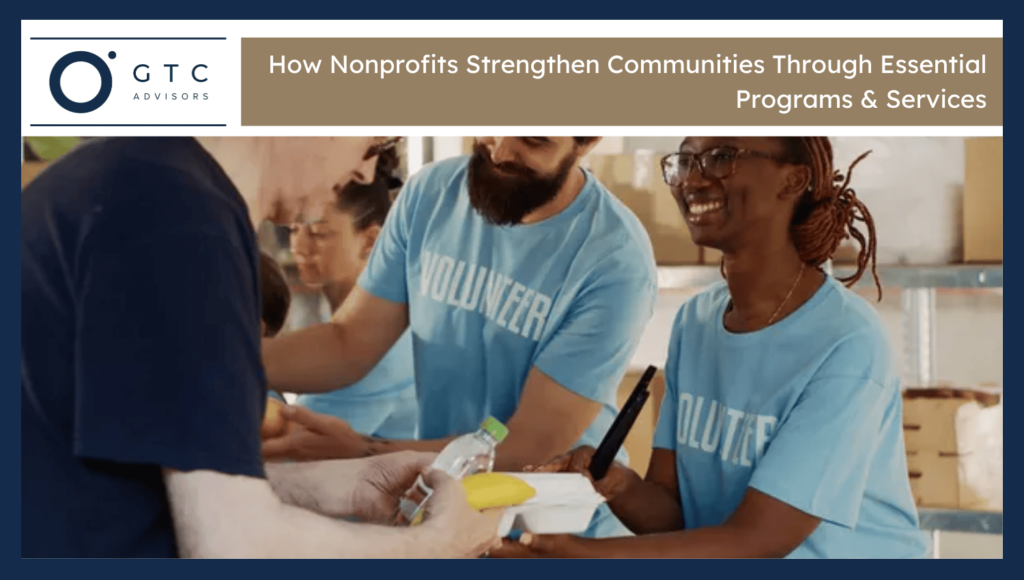
Non-profit organizations address the social concerns and work to eliminate them. IRS 501(c) has two different types of non-profit organziation that work for social welfare. 501(c)(3) strengthen communities with education, shelter, and Youth development. 501(c)(4) focuses on social welfare and is involved in lobbying activities. These non-profit organizations create disaster relief programs to help people in need. Charitable organizations build hospitals, health clinics, and support groups (e.g., the American Cancer Society) to research and treat diseases. They produce jobs and promote entrepreneurship to contribute to a better economy. Nonprofits create volunteer opportunities for those who want to serve people. They have filled the gap between the private and government sectors and raised awareness about environmental conservation, human rights.
What Essential Community Programs Do Nonprofits Commonly Provide?
Here are the six essential community programs that non-profits often provide:
- Social Support & Community Development Programs: Community development and support programs focus on helping people who don’t have the resources. Non-profit organizations provide food assistance to food-insecure people and after-school programs to build emotional connections. These youth mentorship programs focus on supportive relationships. They also offer senior services via programs like Meals on Wheels. These charitable organizations keep all people equal and help immigrants with job searches, housing location, and navigating around community.
- Education, Learning & Skill-Building Programs: Non-profit organizations focus on improving the education system. They create adult literacy and ESL classes to help adults learn reading and writing to help them secure jobs. Job training and placement programs are designed for young people to provide them with training on generating a resume and practicing interviews. These programs enable them to crack high-paying jobs. NGOs also work in day centers to improve the STEM abilities of kids.
- Healthcare, Mental Health & Wellness Services: Charitable organizations run programs for community health like primary care, dental care, and vision services. They also work to reduce substance abuse and offer affordable therapies. Conducting webinars and events on nutrition, healthy living, and mental health impacts the choices.
- Housing, Crisis Intervention & Support Services: Emergency shelters, affordable housing, and disaster relief programs save people from unseen incidents. Nonprofits work for domestic violence support to reduce abuse in homes.
- Arts, Culture & Community Enrichment Programs: Non-profit organizations focus on educational exhibits, public programs, community theaters, and heritage preservation. They prevent the arts and culture from fading among people.
- Environmental & Sustainability Programs: Non-profit organizations work to protect natural habitats and restoration of forests. They focus on spreading the recycling and waste reduction programs to keep the environment safe for living.
How Do Nonprofits Ensure Accessible & Inclusive Services?
Nonprofits remove the physical and digital barriers to make sure they are accessible. They use clear signage near ramps, elevators, wide doorways, and accessible restrooms. They make sure their content meets Web Content Accessibility Guidelines (WCAG) for screen readers. Nonprofits also remove the language barrier with translators. Charitable organizations train staff to respect their clients to provide them with better support. They avoid the hassle of filling out the long forms and replace them with a quick meeting or short forms. A nonprofit organization asks for feedback and then makes changes according to the outcomes to provide accessible services.
What Funding Sources Support Nonprofit Programs?
Non-profit organizations rely on grants, individual donations, and partnerships. Individual donations are the largest source of funding and include three main types. Direct contributors contribute one-time, and major gifts are from wealthy people. Crowdfunding means getting funds from millions of people via online portals or forums. Grant is the second source of funding for non-profit organizations. Government grants are from federal, state, and local agencies, and they are highly competitive. Foundation grants come from corporate and private individuals.
Nonprofit organizations also generate revenue from swelling services and subscriptions. They don’t have to pay the tax on income from programs, sponsorships, and membership fees. The board of directors and volunteers cannot use this money for their personal use.
How Do Nonprofits Measure Program Success & Community Impact?
Non-profit organizations focus on four key performance indicators to track the program’s success. Program effectiveness includes the number of people who participated, program completion rates, and improvement in the living status of affected people. Stability in the economic status of vulnerable people is proof of successful education programs. Non-profit organziation consider the operational efficiency, including volunteer retention rate, staff turnover rate, to measure the program’s success. The higher the retention rate, the successful the program.
How Can Communities Support Nonprofit Programs?
Volunteering is the best method to support the non-profit programs. Volunteers invest their time and skills to help people stay stable. Communities can support the non-profit organizations financially. It includes monetary donations, planned giving, and participating in a fundraising event. Material donation, such as clothing and non-perishable food, works best for these charitable organizations. Raising awareness and advocating for the organization on social media platforms is the easiest way to support NGOs. Communities encourage local shops and companies to support nonprofits through donations, sponsorships, or employee volunteer programs.

George C. Tagg, Jr.
George serves as a trusted counsel to business leaders, non-profit executives, and management teams. George is a licensed attorney with a master’s in international affairs and over 20 years’ experience in the U.S. Congress, Department of State, Department of Defense, global public policy, and political campaigns.