
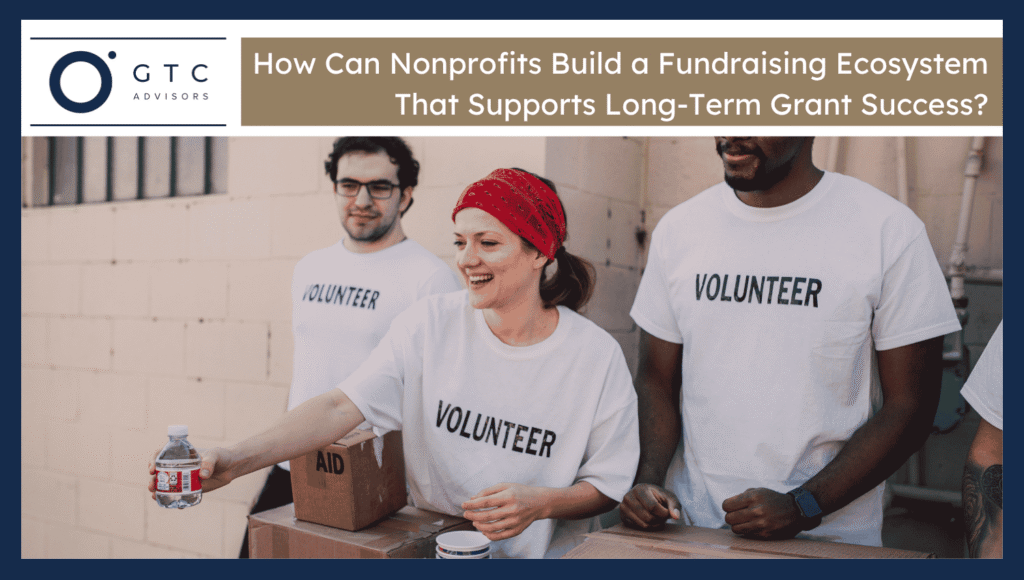
A nonprofit fundraising ecosystem is a network of funds, donors, community ties, internal practices, and grant approaches that collaborate toward the long-term viability of the organization. Grants are not considered the sole source of funding, but rather part of a financial strategy. The blend of grant funding and individual donors, corporate sponsorships, events, and earned revenue models provides a robust financial structure for an impactful organization. Build strong partnerships with funders, and use impact data to ensure operational continuity and amplify long-term community impact. Nonprofits must create an ecosystem that supports these practices to identify opportunities continuously.
What Funding Sources Should Be Included in a Nonprofit Fundraising Ecosystem?
Here are the 6 Funding Sources That Should Be Included in a Nonprofit Fundraising Ecosystem:
- Foundation and Government Grants: Foundation and Government grant awards are large sums of money for targeted programs in the community, scientific study, capital expenditures, and day-to-day operations.
- Individual Donor Contributions: Annual campaigns, major gifts, monthly giving, and planned giving are all sources of predictable, ongoing individual donor contributions.
- Corporate Partnerships and Sponsorships: Strategic corporate partnerships provide direct cash donations, sponsorships, employee giving matching, and in-kind donations.
- Fundraising Events: Galas, community walkathons, benefit auctions, and peer-to-peer drives generate immediate revenue, build visibility, and attract new givers.
- Membership and Community Support Programs: Ongoing relationships and regular financial contributions from key beneficiaries are built through membership and alums groups, or local volunteer groups.
- Earned Income Opportunities: Mission-aligned fee-for-service, consulting services, facility rentals, and sales of branded products generate long-term, unrestricted income.
How Do Grants Strengthen a Nonprofit Fundraising Ecosystem?
Grants provide an organization with dedicated resources to implement and pilot new and innovative community approaches that are successful in the long term. Awards from government or charitable foundations or organizations signal an organization’s mission and further add to its institutional credibility. The external endorsement helps assuage the doubts of individual donors and corporate partners and encourages them to invest alongside the organization. The performance metrics and success stories that result from grant-funded projects are valuable and compelling for future donor appeals, corporate pitch decks, and annual impact reports.
How Can Nonprofits Align Grant Strategies With Fundraising Goals?
Organizations tie grant seeking to longer-term fundraising objectives by developing a clear long-term prioritization and building a “funding roadmap.” Each project has multi-source financial support by matching specific project needs with targeted grants, major donor campaigns, and corporate partners. Nonprofits take the time to identify each grant outcome and work it into the donor message, including program accomplishments that show real-world community results to individual donors. Project grants are essential, but combining them with flexible funding supports general operations, and planning for sustainability after funding ends promotes seamless transitions.
How Can Nonprofits Build Strong Relationships With Multiple Funders?
The first step in developing long-term relationships with multiple funders is to determine which funders you share a philanthropic mission with. Development teams develop structured communication plans that involve funder representatives before, during, and after application windows. Providing clear progress reports, financial tracking, and impact reports builds trust at a deep, institutional level. Open and honest discussion of program successes and challenges changes the relationship between funders from grantmaking to partnership-building, fostering a long-term collaborative relationship.
What Internal Systems Are Needed to Manage a Fundraising Ecosystem?
A solid internal infrastructure supported by specific management tools is essential to run a multi-faceted fundraising platform with all the elements it needs. Nonprofits must have grant tracking software that monitors the grant application pipeline, reporting deadlines, and compliance rules. An integrated donor management system (CRM) is crucial for managing donor history, monitoring interactions, and segmenting donor groups. Organizations need to implement clear financial accounting practices to monitor fund limitations and have an outcome measurement system to analyze program information. Organizations have a functioning cross-functional team structure for grants, communication, and finance.
How Can Nonprofits Use Data to Strengthen Their Fundraising Ecosystem?
Data-driven decision-making is key to better fundraising performance, since it helps identify which grant solicitations, fundraising events, and donor campaigns are best investments. Qualitative and quantitative program outcomes are tracked, providing the hard science essential to crafting a grant proposal and a powerful report to donors. Data on donors and how they engage with your organization is used to inform stewardship programs. Donor engagement data helps development teams customize stewardship based on donor preferences. Leadership shifts staff where they are needed most by regularly assessing campaign metrics and directing resources to the most profitable funding sources.
How Can Partnerships Expand a Nonprofit’s Funding Ecosystem?
Relational partnerships expand an organization’s scope, capacity, and eligibility for funds from a variety of sectors. Partnerships with local community groups provide a boost of credibility and grant opportunities that include collective applications of shared concerns for the region. Corporate partnerships lead to cause-marketing campaigns, corporate foundation grants, and employee volunteer grants. Academic institution collaborations increase the rigor in project evaluation and bridge the gap to special research grants. Public sector agency partnerships bring the non-profit into the funding stream and community programs.
How Can Nonprofits Create a Sustainable Grant-Focused Fundraising Plan?
The key to creating a sustainable fundraising strategy is to create an annual master calendar of grant calls, major donor appeals, corporate drives, and fundraisers. Properly diversifying the revenue portfolio is essential for financial officers to prevent reliance on too large a share of the operating budget from any one grant or source of funding. An active grant pipeline allows for ongoing discovery and submission of upcoming funding opportunities. Spending time on funder stewardship and regularly conducting a fund performance audit to adjust the fund toward strategic goals continually ensures the fund is flexible, robust, and responsive to the organization’s needs.

George C. Tagg, Jr.
George serves as a trusted counsel to business leaders, non-profit executives, and management teams. George is a licensed attorney with a master’s in international affairs and over 20 years’ experience in the U.S. Congress, Department of State, Department of Defense, global public policy, and political campaigns.