
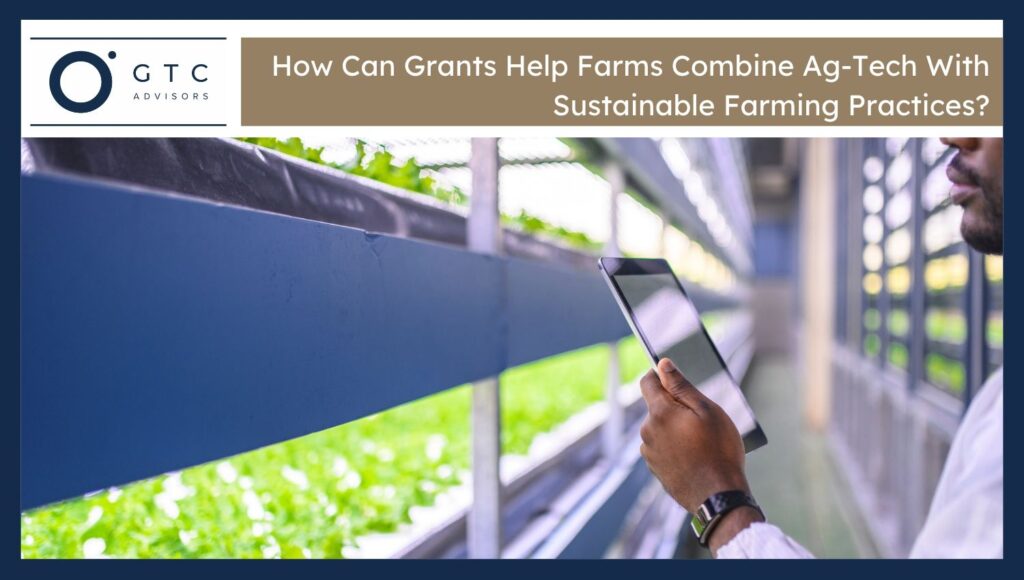
Grants support farms’ transformation to agricultural technology that builds resilient agricultural systems and minimizes unnecessary resource loss. Strong projects link technology to specific environmental or agronomic needs, rather than funding a technology upgrade. These needs include water conservation, soil health, nutrient management, pest control, grazing, and weather-related decisions. These sensors, mapping, monitoring, and digital platforms are valuable when they help farmers make better decisions on real farms. The project needs to show both sustainable improvements and on-farm use. Reliable data, appropriate tools, affordable operating costs, and clear integration into daily farm activities also support the technology.
What Sustainability Problem Should Determine the Ag-Tech Investment?
The farm should pinpoint sustainability issues before selecting technology. Common issues include excessive water use, uneven watering, nutrient loss, poor soil quality, unnecessary pesticide use, grazing pressure, and manure disposal. Weather uncertainty also affects when farms irrigate, spray, plant, and apply nutrients. The problem should be described by area (field or crop, soil zone or irrigation block, or livestock group) as part of the project plan. It should also document current management and explain where uncertainty leads to unnecessary resource use or environmental pressure. This baseline gives farms a basis to choose technology that supports a specific decision, rather than collecting data for data’s sake.
Which Ag-Tech and Sustainable Practice Combinations Can Grants Support?
Here are the 6 Ag-Tech and Sustainable Practice Combinations Grants Can Support:
- Precision Irrigation + Soil-Moisture Management: Soil-moisture sensors, flow monitoring, field mapping, and irrigation decision tools enable farms to irrigate based on crop needs, soil conditions, and weather. These tools help time irrigation and reduce reliance on a fixed irrigation schedule. Projects monitor water use and irrigation management to evaluate whether the combination contributes to better resource stewardship.
- Soil Sensing and Mapping + Soil-Health Practices: Soil sampling technology, in-field soil sensors, soil mapping, and digital records inform cover crops, amendments, crop rotation, and minimize soil disturbance. These tools help farms determine when and where a practice is most suitable. Soil indicators and management records show how technology supports targeted soil-health decisions over time.
- Remote Sensing and Scouting + Integrated Pest Management: Imaging and trapping, sensors, and digital scouting platforms allow farms to monitor pest or disease pressure remotely and implement targeted interventions. Timely, more specific detection minimizes unnecessary routine pesticide applications. Farms compare scouting results, treatment areas, pesticide use, and pest-management success, and assess the method.
- Variable-Rate Tools + Nutrient Stewardship: Field zones, soil and crop data, application maps, and variable-rate equipment better match nutrient applications to crop needs. This enables more precise fertilizer application and reduces over-application and losses. Monitor application percentages or input usage, as well as soil or nutrient indicators.
- Livestock Monitoring + Grazing or Manure Management: Animal monitoring, location, pasture information, and manure-management records help guide grazing rotation, herd movement, and nutrient distribution decisions. These resources help farms plan livestock systems that align with pasture and sustainable management objectives. The measures should relate to project outcomes, whether grazing patterns, nutrient distribution, or changes in relevant inputs.
- Weather and Decision-Support Tools + Conservation Timing: Local weather data, forecasts, soil conditions, and decision-support tools guide farm practices to optimize timing for planting, irrigation, field traffic, spraying, nutrient application, and cover crop termination. Timing helps ensure field activities are coordinated with weather and soil conditions. Farms record whether decisions changed and whether the new timing saved resources or reduced associated field risks.
When Should Technology Support Agronomic Judgment Rather Than Replace It?
Use technology based on knowledge, not as a replacement for agronomic judgment. Digital recommendations, alerts, models, and prescriptions are not perfect for all soil, crop, weather, equipment, and local circumstances. Field checks, scouting, soil observations, crop assessments, and livestock monitoring should verify key recommendations for the farm. Rules should also be established for when farmers, agronomists, crop advisers, or livestock managers deviate from a project plan recommendation. Documenting these decisions gives teams insight into the technology’s strengths and weaknesses. The aim is to enable timely, evidence-based management and keep the experience grounded in real field conditions.
What Farm Data Must Be Reliable Before Ag-Tech Can Improve Sustainable Decisions?
Reliable data is critical when technology informs irrigation, soil management, nutrient use, pest control, or livestock management. Establish a farm baseline using relevant data on water use, soil condition, input use, grazing patterns, and weather exposure. Data needs to match the decision. Whole-farm averages do not give adequate information to guide decisions for specific field zones. Sensors, meters, monitors, maps, and sampling procedures must be properly placed, calibrated, and monitored. Using historical field data and recent measurements also provides a broader perspective than a single season. Farms should confirm data ownership, exportability, and availability after the subscription ends. Each major dataset must have a clear purpose and decision driver.
How Can Ag-Tech Fit Existing Equipment, Field Conditions, Connectivity, and Seasonal Workflows?
Ag-tech works best when it fits current farm systems and operating conditions. Farms should test compatibility of all sensors, controllers, implements, software, displays, and data formats before investing. Test connectivity in real fields, barns, and remote locations where the tools are used. Performance varies based on soil type, topography, field size, crop systems, weather exposure, and irrigation layout; complete installation, calibration, training, and testing before the appropriate growing or management period. The project should identify who will handle maintenance, updates, repairs, charging, and vendor support. Data review is built into existing farm processes to prevent duplicate data entry and extra work that discourages regular use.
What Evidence Shows Ag-Tech Is Improving Sustainability Without Undermining Farm Viability?
Here is the 6 Evidence Shows Ag-Tech Is Improving Sustainability Without Undermining Farm Viability:
- Water and Input Use: Record water, fertilizer, pesticide, feed, fuel, or other inputs by animal, production unit, or management zone. Select actions that relate directly to the sustainability objective of the project.
- Soil and Nutrient Outcomes: Employ soil-health, nutrient, organic matter, erosion-risk, or infiltration indicators if relevant. Allow enough time for meaningful change, especially for indicators that take several growing seasons.
- Targeting and Loss Reduction: Record changes in overwatering, unnecessary applications, runoff risk, treated areas, or any other avoidable losses. Detailed maps don’t necessarily prove that resource use has improved.
- Yield or Production Stability: Monitor yield, product quality, livestock performance, or production stability, as appropriate. Evaluate production results against sustainability gains to identify unacceptable trade-offs.
- Operating Burden and Reliability: Document downtime, calibration requirements, repair, troubleshooting, operator time, data clean-up, support requirements, and system failures. These measures reflect the technology’s viability in regular farming activities.
- Total Cost of Continued Use: Estimate subscription, connection, replacement sensor, replacement parts, service, training, and maintenance costs. Compare these ongoing costs with the known environmental and agronomic benefits to determine whether the investment is sustainable for the farm.

George C. Tagg, Jr.
George serves as a trusted counsel to business leaders, non-profit executives, and management teams. George is a licensed attorney with a master’s in international affairs and over 20 years’ experience in the U.S. Congress, Department of State, Department of Defense, global public policy, and political campaigns.