
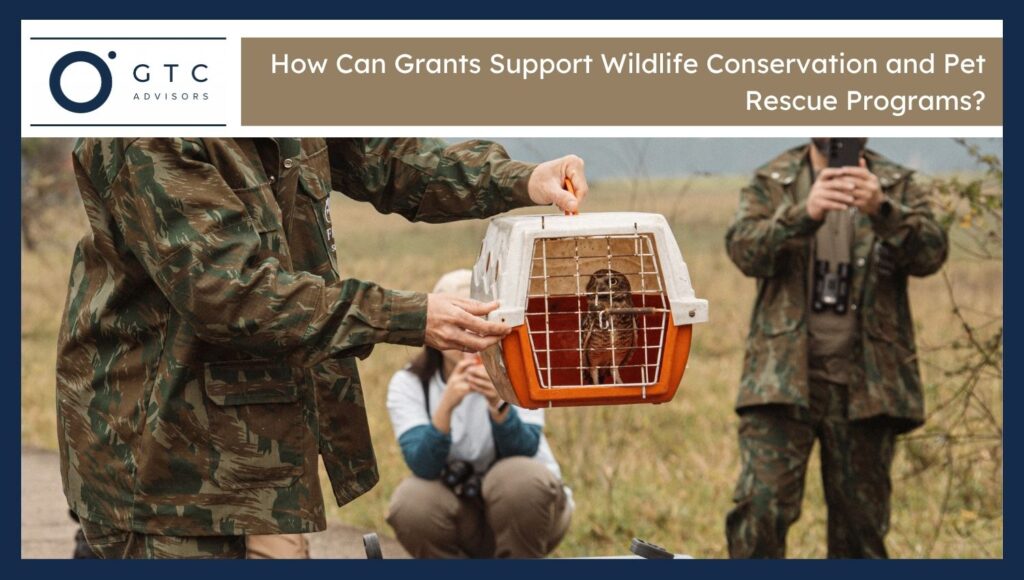
Grants support animal-based organizations for wildlife conservation or domestic animal rescue. These two tracks protect animals, but they have different needs, activities, partners, budgets, and outcome indicators. Wildlife conservation projects involve habitat conservation, wildlife monitoring, wild animal rehabilitation, and wildlife protection. Pet rescue programs focus on emergency admission, veterinary treatment, temporary shelter, and rehoming companion animals. Good proposals identify a specific need, define a clear intervention, and set realistic project targets. Organizations also comply with animal-care requirements and assess the results based on their chosen funding stream. Grants come with eligibility requirements; applicants must check with the funder to determine which activities and expenses qualify for funding.
What Wildlife Conservation Activities Can Grant Funding Support?
Here are the 6 Wildlife Conservation Activities that Grant Funding Can Support:
- Habitat Protection and Restoration: Grants to eligible projects that protect, restore, or improve habitat for particular wildlife species or ecological communities. Activities include restoring native vegetation, improving habitat, and addressing documented habitat degradation. Each project must clearly link the habitat work to the desired wildlife conservation outcome.
- Species Monitoring and Field Conservation: Grants are available for wildlife surveys, population monitoring, tracking, field equipment, and conservation data collection. These activities help understand species populations, identify threats, and assess conservation needs. Project methods and monitoring targets must be tailored to the species and local conditions.
- Wildlife Rehabilitation and Release: Eligible grants support the rescue, stabilization, rehabilitation, and appropriate release of injured or displaced wild animals. Specialized enclosures, food, veterinary care, rehabilitation supplies, and authorized transport costs are considered expenses. The organizations must have the proper permissions, trained staff, and procedures for releasing each species.
- Human-Wildlife Conflict Reduction: Grants support activities that reduce harmful interactions between people and wildlife. Eligible activities include deterrence, habitat management, prevention education, and community coordination. Projects must focus on a documented conflict and demonstrate the benefits to wildlife and mitigation of harm to people.
- Wildlife Disease and Threat Reduction: Funding supports monitoring, biosecurity, and prevention activities tied to identified wildlife threats. These dangers include diseases of wild animals, the importation of other species, and polluted water. Projects must focus on reducing one conservation concern and should not expand into unrelated public-health or environmental activities.
- Community Stewardship for Wildlife Conservation: Grants for volunteer, landowner, school, and community involvement when activities directly support wildlife conservation. Participants help with habitat protection, monitoring approved species, or reducing human-wildlife conflict. Programs must have clear roles and conservation targets.
What Pet Rescue Activities Can Grant Funding Support?
Here are the 6 Pet Rescue Activities Grant Funding Can Support:
- Emergency Rescue and Intake: Grants can support eligible animal retrieval, emergency intake, temporary animal housing, animal transport, and animal stabilization services. These activities help domestic companion animals enter safe rescue care after abandonment, displacement, or other emergencies. Funding is commensurate with intake volume and the organization’s capacity to provide the required care.
- Veterinary Stabilization and Treatment: Rescued animals receive veterinary care such as examinations, vaccinations, medication, diagnostic testing, surgery, and other treatment necessary to stabilize and treat the animal. These services help animals recover and prepare for proper placement. Proposals should include clear care protocols and qualified veterinary partners.
- Sterilization for Rescue Populations: Grants are available for eligible sterilization for animals in rescue care or defined rescue-related community programs. The activities reflect the management of reproduction between the populations included in the project. Organizations must verify that the processes and associated costs meet the requirements of the grant.
- Foster and shelter capacity: Funding provides for kennels and crates, sanitation materials, bedding, temporary housing, isolation areas, and foster resources. These improvements allow animals to be rescued and safely accommodated until they recover or are placed. Capacity targets must account for staffing, facilities, and available ongoing care resources.
- Transport and Transfer Programs: Transport and transfer program grants fund eligible transportation, crates, fuel, logistics, and transfer coordination for rescued animals. Activities include working with animals and veterinary services, fostering, partner shelters, or appropriate placement. Programs must have safe transport practices and reliable receiving partners.
- Adoption Readiness and Rehoming: Funding supports behavior assessment, basic training, microchipping, and documentation so rescued animals can be adopted into the right home. These services help organizations determine individual needs and make suitable placements. Projects require known placement guidelines and documentation for animals.
What Evidence Should Wildlife Conservation and Pet Rescue Organizations Use to Show Funding Need?
You need proof of a problem in the funding track you choose. Wildlife-conservation proposals use species-status data, habitat-loss data, population trends, mortalities, conflict reports, and known threats. Pet rescue proposals require intake numbers, shelter capacity limits, lack of foster homes, veterinary case records, length of stay, and transfer needs. Geographic information helps delineate the habitat, wildlife population, or rescue service area affected. Existing conservation groups, rehabilitation centers, shelters, veterinary resources, and public agencies are also mapped to show gaps in services provided. Baseline measures provide a starting point for monitoring habitat restoration, wildlife observations, rehabilitation admissions and rescue intake, treatment volume, foster capacity, and placement outcomes. The evidence should be relevant to the specific project and not to a sweeping statement on animal welfare.
How Should a Grant-Funded Wildlife Conservation or Pet Rescue Project Be Designed?
A good project starts with a clear goal in line with the identified need. Wildlife conservation projects identify the species, habitat, threat, or ecological problem, while pet rescue projects identify the rescue population, care gap, facility need, or placement challenge. This is followed by a description of a bounded intervention, defined as either habitat restoration, species monitoring, wildlife rehabilitation, emergency intake or veterinary stabilization, or foster expansion. Realistic targets set expected conservation outcomes or volumes of animal-care services for the grant period. Organizations must also be assigned separate responsibilities for fieldwork, animal care, veterinary care, permits, transport, placement, and reporting. The practical timeframe demarcates the work between planning, procurement, staff preparation, project delivery, monitoring, and evaluation. The final design should be consistent with the resources of the organization and the funder’s allowable activities.

George C. Tagg, Jr.
George serves as a trusted counsel to business leaders, non-profit executives, and management teams. George is a licensed attorney with a master’s in international affairs and over 20 years’ experience in the U.S. Congress, Department of State, Department of Defense, global public policy, and political campaigns.