
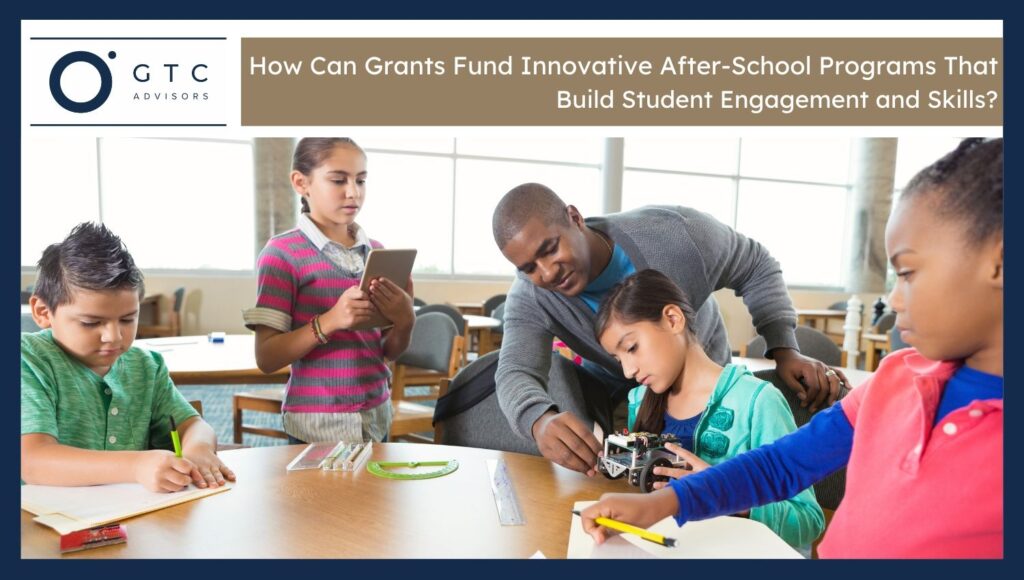
Grants support out-of-school programs that provide school settings, nonprofits, and youth-serving organizations with funding beyond the school day. Grants fund hands-on projects, creative activities, career exploration, mentoring, and community challenges that build practical skills. Strong programs give students choices and opportunities to spend time with supportive adults and peers. They also consider students’ schedules and other factors, including transportation, food, and activity costs. These activities are linked to measurable outcomes such as attendance, participation, skill acquisition, and student belonging through a clear grant plan. Research by the Afterschool Alliance highlights the value of engaging activities, supportive relationships, and student voice in after-school programs.
What Makes an After-School Program Innovative Instead of Just More Classroom Time?
Students participate in an innovative after-school program that offers a unique experience beyond their school day. It does not rely predominantly on lectures and worksheets; instead, it lets students develop, explore, work together, problem-solve, and use new skills. It supports interdisciplinary projects, student-initiated projects, creative production, and real-world challenges. Student choice is also key, as young people are more likely to be engaged in learning when their interests are reflected in it. A good proposal describes what makes the program special, what skills students learn, and how the organization measures students’ progress.
Which Innovative After-School Models Can Grants Support?
Here are the 6 Innovative After-School Models Grants Can Support:
- Project-Based STEM and Maker Programs: Grants support robotics, coding, engineering challenges, science investigations, and fabrication and design projects. Students learn through experimentation, prototyping, problem-solving, and refinement.
- Arts, Media, and Creative Production: Funding covers music, theatre, visual arts, photography, film, podcasting, writing, and graphic design. Students learn innovative strategies and create artwork for exhibitions, performances, publications, and community audiences.
- Career Exploration and Skill Labs: Programs help students explore pathways in an entrepreneurial environment, build financial literacy, participate in career simulations, develop career portfolios, and practice workplace problem-solving. These activities are linked to people’s interests and future education decisions.
- Mentoring, Leadership, and Peer-Led Programs: Mentoring relationships, a student leadership team, peer tutoring, and a youth advisory group. Participants are guided and take responsibility for projects, teams, and decisions.
- Community Problem-Solving and Civic Projects: Students explore community issues and engage in service learning projects by researching, designing, and implementing changes in their community. These activities develop collaboration, communication, critical thinking, and civic responsibility.
- Wellness, Outdoor, and Experiential Programs: Funding includes outdoor learning, nature activities, recreation, movement, mindfulness, and team challenges. Good activities build confidence, teamwork, healthy habits, and hands-on skills by engaging learners.
How Should Student Voice and Choice Shape an Innovative After-School Program?
Student voice helps plan activities young people genuinely want to attend. Collect feedback through surveys, listening sessions, youth advisory groups, and pilot sign-ups in schools and non-profits. Students should have choices in projects, roles, themes, and creative forms, and staff should have clear learning goals and safety procedures. Younger participants should be guided, while older students take a more active role in planning and leadership. Frequent feedback also gives program teams a chance to tweak activities before students lose interest. Student voice, experiential learning, and positive adult interactions are key components of positive afterschool experiences, according to the Afterschool Alliance.
How to Design the Program for the Real After-School Window and to Ensure Student Participation?
A realistic schedule considers how students need to change gears at the end of the school day, including dismissal, transportation, check-in, and snacks. Programs are more effective when their length matches students’ energy and attention. A balanced session is not an extension of the school-day routine, but active learning, project work, breaks, and reflection. Short and longer activities provide immediate satisfaction, and longer activities encourage students to return. Flexible session times also make it easier for students to balance their family responsibilities, sporting events, and employment. Monitoring attendance helps teams identify scheduling issues and activities that keep children engaged.
What Staffing and Mentor Structure Supports High-Quality After-School Experiences?
Strong programs match facilitators’ skills to students’ activities. Teachers, artists, coaches, STEM specialists, college students, and community mentors bring a range of strengths. Beyond subject-matter expertise, staff training should emphasize communication, inclusion, supervision, and age-appropriate facilitation skills when working with young people. Beyond direct activity time, grant budgets should include time to prepare, set up equipment, coordinate, and review projects. Job clarity and regular supervision provide a safer (and more supportive) experience. The American Institutes for Research report that positive relationships between staff and students are a key component of quality after-school programs.
How Should Programs Measure Engagement, Skill Growth, and Student Belonging?
Here are the 7 ways programs should measure engagement, Skill Growth, and Student Belonging:
- Attendance and Retention: Monitor enrollment, session attendance, repeat participation, withdrawals, and differences across activities and groups. Compare past attendance to see which activities best bring students back into the building. Examine attendance rates across grade, age, and participation barriers to identify groups that need extra support.
- Active Participation: Document times of student building, creating, talking, practicing, collaborating, leading, or meaningful tasks in sessions. Staff Observation sheets and activity logs indicate that students are active rather than merely watching or listening. Examine engagement during reviews across activities to see which formats capture students’ interest.
- Skill Development: Evaluate the development of technical, creative, communication, leadership, and problem-solving skills through projects, demonstrations, performances, portfolios, and rubrics. Create a baseline before the program and compare it to students’ work at the end of the program. Maintain a record of completed work to show progress and skills that need further practice.
- Student Choice and Ownership: Record student choices, leadership, and participation in activity planning. Gather input to determine if students’ interests influence the program. Reflect on when students suggest ideas, make decisions, solve problems on their own, and take responsibility for finishing their projects.
- Belonging and Relationships: Use age-appropriate surveys and feedback to determine whether students feel welcomed, supported, connected to peers, and comfortable contributing. Ask whether adults listen to their ideas, respect them, and help when needed. Analyze responses with staff to pinpoint issues related to inclusion, peer relations, and emotional support.
- Completion of Meaningful Outputs: Number of prototypes, performances, portfolios, presentations, exhibitions, publications that demonstrate applied learning. Evaluate each production using specific criteria, including creativity, quality, utility, teamwork, and problem-solving. Document completed and remaining tasks, and determine where students need additional time, direction, or resources.
- Re-Enrollment or Continued Interest: Monitor students who re-enroll in a school program, participate in higher-level activities, take leadership positions, or maintain skills acquired in a program. Discuss with students which activities they want to keep going and what they want to try next. Compare repeat participation with student feedback to identify the program elements that create long-lasting interest.

George C. Tagg, Jr.
George serves as a trusted counsel to business leaders, non-profit executives, and management teams. George is a licensed attorney with a master’s in international affairs and over 20 years’ experience in the U.S. Congress, Department of State, Department of Defense, global public policy, and political campaigns.