
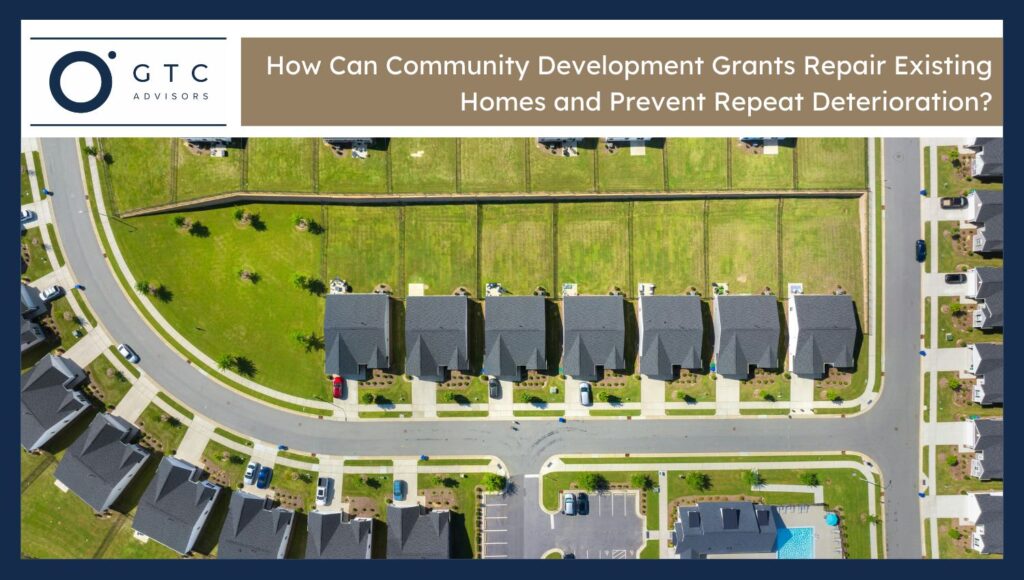
Community development grants rehabilitate existing homes and address physical issues that threaten them. These programs restore and rehabilitate deteriorated residential properties, returning them to basic function and preventing further damage. Funding covers the roof, structure, plumbing, electrical systems, drainage, and other key features. Local governments, not-for-profits, community development organizations, and housing partners use rebuild programs to fix identified property issues. They start by determining the physical cause of the deterioration. They then evaluate the property, choose the best rehabilitation plan, prioritize repairs, and define construction duties. This is not the same as assistance with purchasing a home, rent assistance, or broader housing affordability initiatives. It focuses on rehabilitating existing residential properties. A finished project does not necessarily mean a successful project, even if the contractors complete the approved work. The root cause of the problem also needs to be addressed. Things that have to work in the house have to work; things that need to happen should not fail.
Which Physical Housing Failure Is Driving the Deterioration?
The first step in the rehabilitation program is to determine which physical failure is causing the problem. Visible damage indicates a bigger problem. An investigation should extend beyond the damaged area to include water stains, damaged ceilings, deteriorated flooring, and peeling finishes. The causes are a leaky roof, a plumbing leak, poor drainage, or moisture intrusion. Other important factors include structural movement, failing foundations, unsafe electrical systems, and failing heating equipment. Program staff analyze inspection reports, maintenance logs, photographs, repair bills, and reported property conditions. They recognize how deficiencies relate to one another and whether one deficiency led to another. This matters because if you fix the symptoms without tackling the underlying cause, the problem will keep recurring. The assessment also identifies essential housing functions affected by the problem. These include weather protection, structure, sanitation, electricity, plumbing, heating, cooling, and safe access. The project then specifies the particular physical problem which the rehabilitation funding will rectify. This provides a clear foundation for selecting the program model and designing a long-term repair scope.
Which Rehabilitation Program Model Fits the Property and Occupancy Situation?
Here are the 5 Rehabilitation Program Models that fit the Property and Occupancy Situation:
- Owner-Occupied Home Rehabilitation: This model is designed for an existing home owned by the occupant that has identified problems. Funding addresses needed repairs, not the purchase of a home or mortgage assistance. Program teams evaluate the property’s physical condition and approve a rehabilitation scope. Written contracts detail the owner’s duties, access and funding requirements, and post-repair conditions. The project is designed to restore the house’s functions and address the root causes of deterioration.
- Occupied Rental Rehabilitation: A model that encourages physical upgrades of existing rentals while tenants live in the unit. Programs provide a clear framework for landlord access, contractor responsibilities, construction timelines, and measures to safeguard occupants. Agreements outline the owner’s rehabilitation responsibilities and the property’s condition upon completion. The emphasis is on fixing physical problems, and no general rental-assistance or rent-affordability programs are established.
- Vacant but Recoverable Housing Stabilization: Some vacant houses have substantial deterioration but are technically capable of being rehabilitated. This model focuses on stabilizing and repairing properties to achieve residential function for targeting purposes. It addresses structural conditions, major systems, moisture issues, and the overall construction project. This work will focus on addressing the causes of deterioration and making the property suitable for normal residential use.
- Small Multi-Unit or Scattered-Site Rehabilitation: A model that provides coordinated rehabilitation to several units or separate properties. Programs set up uniform procedures and standards for inspections, repairs, contractor requirements, and close-out. The repeatable process allows the administrator to compare a property’s condition and track construction quality. Each property is still assessed individually, as weaknesses and repair requirements vary.
- Emergency Repair Track: An emergency repair pathway is for physical failures that pose a serious threat of significant property damage or to the continued functioning of the housing. This includes leaking roofs, broken pipes, unsafe electrical wiring, or structural issues that need to be addressed. Programs encompass a narrow, targeted set of activities to address the immediate shortcoming. Broad rehabilitation is a separate process that is assessed, funded, and approved separately. This separation helps avoid emergency fixes that only partially address property rehabilitation.
How Should Programs Decide Whether a Property Is Technically Viable for Rehabilitation?
A whole-property condition assessment is required before approving major rehabilitation projects. The assessment process identifies vital systems, connection deficiencies, and hidden areas of damage. It also reviews whether any visible issues are related to structural, moisture, plumbing, roofing, or electrical problems. Administrators then estimate the total cost of required repairs. This estimate covers upstream work and dependent repairs to achieve long-lasting results, not just the most visible defect. The proposed scope is compared with the program’s capacity, available funding, contractor qualifications, construction complexity, and expected completion time. It is not a viable rehab project if it is not feasible to fix failures that are critical to a property’s rehab. You’re not finished if you patch up the interior of your home, but don’t repair the roof leak or structural problem,. Programs audit insurance-involved repairs, warranties, pending claims, other rehabilitation awards, and planned construction. These activities impact project work and eliminate funding duplication. Any property that needs to be rebuilt or has extensive capital improvements not covered under the program must find another way to receive the funding. Instead of granting permission to implement an underfunded project, administrators document those restrictions. Technical viability refers to the ability to have a realistic, well-documented plan for long-term rehabilitation within the program’s resources.
What Evidence Shows the Home Was Stabilized Rather Than Temporarily Patched?
Here is the 5 Evidence Shows the Home Was Stabilized Rather Than Temporarily Patched:
- Documented Deficiencies Corrected: Ensure the pre-rehabilitation assessment matches the inspection results and that construction records are complete. Ensure each deficiency, for which funds were approved, was repaired or replaced. Record completed work with photographs, invoices, inspection reports, and the contractor’s records.
- Underlying Cause Resolved: Ensure the cause of deterioration was permanently corrected. This includes the roof, moisture source, pipe, drainage problem, structural defect, or failed system that caused visible damage. Repairing the problem does not mean the actual cause has been addressed.
- Repeat Failure Reduced: Check repair callbacks, emergency service calls, repeat leaks, repeat outages, and maintenance records following repair. Cessation of repeated failures indicates the rehabilitation successfully solved the original problem. Conduct additional evaluation if damage recurs.
- Housing Function Restored: Ensure rehabilitated features, utilities, entrances, and systems serve their intended residential function. The property assessment and final inspection check these outcomes. Residents also require access to basic services impacted by construction.
- Durability After Completion: Conduct follow-up inspections, review warranty data, maintenance documentation, and contractor callbacks to evaluate performance after closeout. These records show whether repairs continue to function beyond the initial repair period. Recurring repair needs are minimized and the value of the public investment is preserved through durable rehabilitation.

George C. Tagg, Jr.
George serves as a trusted counsel to business leaders, non-profit executives, and management teams. George is a licensed attorney with a master’s in international affairs and over 20 years’ experience in the U.S. Congress, Department of State, Department of Defense, global public policy, and political campaigns.