
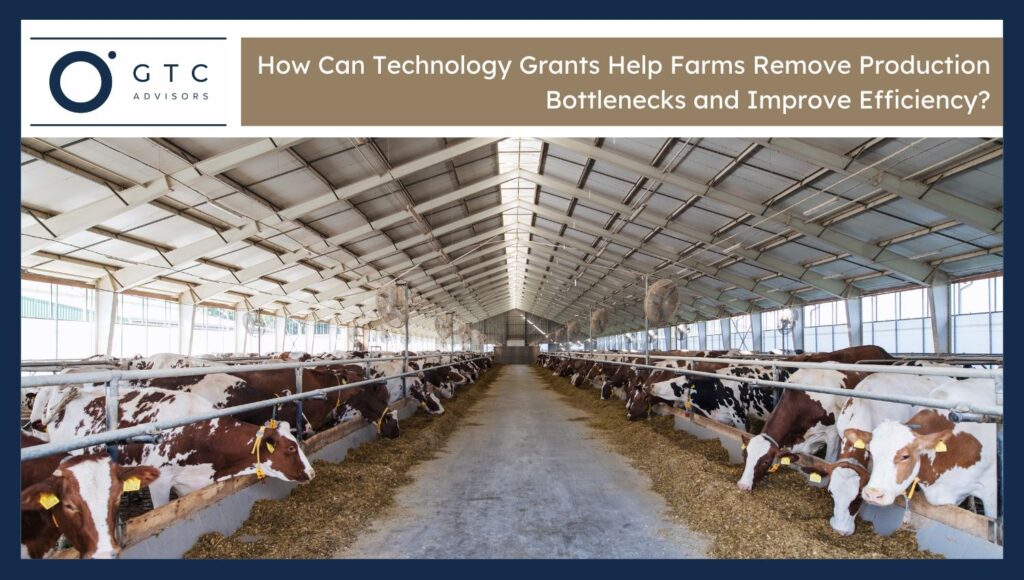
Technology grants help farms make targeted operational improvements by acquiring technology and systems that overcome specific bottlenecks. Bottlenecks include labor time, slow harvesting, repeated handling, machinery downtime, packing congestion, and post-harvest losses. The highest investment improves workflow from one production stage to the next. Farms assess current performance, identify constraints during peak seasons, and choose technology that fits their workload. They also need to consider employee training, maintenance, available services, and related production phases. A successful upgrade improves overall operational flow, not just speeds up one task.
What Production Bottleneck Should Determine the Technology Investment?
Map the production flow on the farms before selecting production technology. This includes studying every stage, from input preparation and fieldwork to harvesting, packing, storage, livestock processing, and dispatch. Look for areas where tasks frequently “queue, back up, or manually work hard. These baseline values (labor hours, units per hour, acres per day, equipment idle time, queue length, product loss) indicate the key constraint. Peak season conditions matter, too, as planting, harvesting, milking, and packing needs surpass normal capacity. When equipment isn’t the issue, the problem is scheduling, layout, staffing, or task coordination. The investment must have a specific objective, like reducing aerial crew hours per acre or shortening harvest-to-cooling cycle time.
Which Stages of Farm Production Can Technology Make More Efficient?
Here are the 6 Stages of Farm Production That Technology Can Make More Efficient:
- Seeding, Planting, and Transplanting Operations: Seeders, planters, transplanters, guidance systems, and material-handling aids minimize pass count, crew requirements, setup time, and delays in a narrow planting window. Farms need equipment commensurate with the number of acres, work program, and current production program.
- Material Movement and In-Field Logistics: Tools that move bins, feed, harvested crops, inputs, and equipment help minimize transport delays and repeated handling. More efficient conveyors, lifts, carts, and loading systems reduce idle time and keep productive tasks moving.
- Harvest and Picking Operations: Harvesting aids, mechanical harvest systems, conveyors, picking platforms, and collection tools help to overcome slow picking, labor shortfalls, and delays during time-sensitive harvest periods. Investing in the right equipment helps crews transport harvested products efficiently without overloading the next stage of handling.
- Sorting, Grading, Washing, and Packing: These processes help farms process product at a consistent speed. These are beneficial when manual handling creates queues, inconsistent output, repetitive tasks, or delays from harvest to dispatch.
- Cooling, Storage, and Product Handling: Cooling, storage control, monitoring, loading, and handling systems help reduce delays between harvest and storage. Farms benefit when products are transferred less frequently, wait less, and are better coordinated between production and handling capacity as they move through storage facilities.
- Livestock Feeding, Milking, Handling, and Routine Production Tasks: Feeding systems, milking equipment, weighing technology, sorting systems, manure-handling equipment, and animal-movement technology reduce repetitive labor and workflow congestion. Farms must determine whether these systems improve normal farm operations while still providing safe handling and proper animal care.
When Should a Farm Automate a Task Instead of Improving the Workflow First?
Farms should eliminate any noticeable process waste before starting an automation project. Redundant data entry, multiple steps to move information from one place to another, unclear staging, excessive setup, and unnecessary movement cause delays that better organization addresses. Automation is better for repetitive, high-volume work with consistent workflows and quantifiable machine-time costs. The variation in crops, field conditions, package types, animal sizes, and work sequences should also be evaluated within the farm (these factors influence performance). Skilled workers remain vital for quality assessment, troubleshooting, handling exceptions, and animal care. A partial automation system, such as a conveyor, lift device, semi-automatic packing machine, or scheduling tool, solves a problem without full automation. Prioritize automating the constraint that limits total output, not necessarily the most obvious manual constraint.
How Should Farms Size Technology to Acreage, Herd Size, Crew Capacity, and Peak Demand?
Size technology based on actual volumes to be produced and realistic operating windows for the farm. Base equipment size on the number of acres, animals, boxes, loads, or batches you will process during the periods that matter most. Peak demand matters most when weather conditions, product quality, livestock schedules, or downstream limitations limit time. Undersized equipment leaves the original restriction unchanged for much of the season, while oversized equipment is underused much of the season. Other nonproductive time, such as setup, cleaning, calibration, changeovers, travel, and refueling, must also be included in the capacity calculations. Compare the capacity of connected stages before purchasing equipment on the farms. The more a harvester, packing line, or milking system produces, the longer the delay is pushed to the next system.
How Should Labor Roles and the Production Sequence Change When New Technology Is Introduced?
Farms must restructure tasks and production processes when technology changes how work is done. Reducing manual work creates new needs for operation, staging, quality control, cleaning, maintenance, and material supply. Managers should assign someone to set up, shut down, inspect, calibrate, sanitize, charge, and ensure safety daily. Staff also need training on normal operation, error handling, jam handling, troubleshooting, and escalation procedures. Cross-training helps to prevent production from stopping if one trained operator is missing. Farms need to reconfigure their staffing to match the increased equipment capacity from upstream to downstream. Determining how saved labor hours are used also shows whether the investment reduces overtime, increases production capacity, improves quality control, or supports other vital work.
What Evidence Shows That Farm Technology Actually Improved Production Efficiency?
Here is the 7 Evidence Shows That Farm Technology Actually Improved Production Efficiency:
- Labor Hours per Unit of Output: Count crew hours per acre, box, animal, load, batch, or other production unit before and after the upgrade.
- Throughput: Record acres completed, animals handled, units harvested, boxes packed, or loads processed per hour or per day at the desired production stage.
- Cycle and Waiting Time: Monitor processing time, waiting queues, equipment idle time, and delays between processes. High-speed equipment does not necessarily lead to high overall production rates.
- Equipment Utilization and Idle Time: Compare productive operating time with work window. Recognize slack time due to manpower shortages, material shortages, repairs, changeovers, and upstream or downstream delays.
- Downtime and Recovery Time: Document the frequency and duration of breaks, repair time, service response, restart, and lost production. These measures indicate whether reliability evidence supports the anticipated efficiency improvements.
- Product Loss, Damage, and Rework: Monitor bruising, spoilage, product rejection, repacking, mis-sorting, and other losses due to product quality. Increased throughput is negative if it increases damage or waste.
- Operating Cost per Production Unit: Check labor, maintenance, consumables, service, charging, software, and other operating costs per production unit. Compare the technology cost with ongoing operating costs to assess long-term value.

George C. Tagg, Jr.
George serves as a trusted counsel to business leaders, non-profit executives, and management teams. George is a licensed attorney with a master’s in international affairs and over 20 years’ experience in the U.S. Congress, Department of State, Department of Defense, global public policy, and political campaigns.