
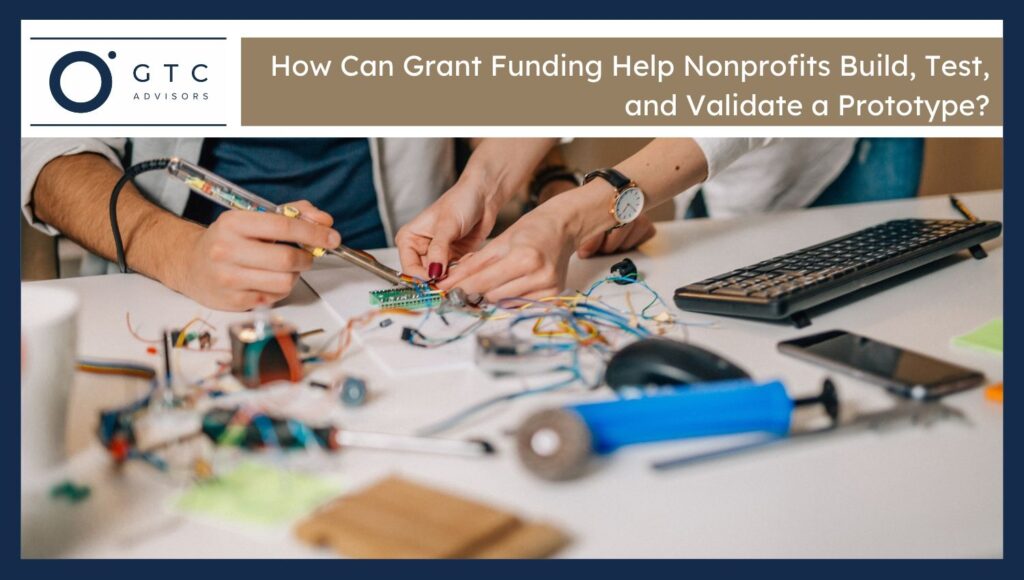
Grant funding helps nonprofits pilot a solution before a full program rollout or major development. A prototype is an early form of a mission-driven solution, like a digital tool, assistive device, data system, or community-use platform that is tested. It lets organizations assess the solution’s validity, user needs, and suitability for the intended environment. Prototype funding provides dedicated development, evidence-based testing, and improvements. The aim is to minimize uncertainty before the next investment decision. A successful prototype doesn’t require all the final features. It must have enough supporting data to determine whether to pursue, modify, or abandon the idea.
What Must Be Clear Before a Nonprofit Seeks Funding for a Prototype?
A nonprofit organization must determine the mission problem and articulate the need for a prototype before entering the prototype funding process. The organization should determine who will use the prototype, what it is supposed to accomplish, and under what circumstances people will use it. It should also identify the primary unproven assumption, for example, whether the tool gathers data reliably or users do a critical workflow. A designated project lead shall coordinate testing, changes, and retention of learning between versions. The organization needs to validate that prototyping is the appropriate next step. A program pilot is more suitable when the solution is already in place, and the primary question relates to staffing, service delivery, or participant outcomes.
Which Prototype Stages Can Grant Funding Support?
Here are the 5 Prototype Stages Grant Funding Can Support:
- Pilot or Proof-of-Concept: A mini technical or design test to assess the feasibility of the core mechanism. It addresses a specific issue before the nonprofit commits to an entire solution.
- Low-Fidelity Mockup: Rough sketches, clickable models, paper interfaces, storyboards, or basic models to test basic workflows, layouts, and user understanding. These lower-cost representations surface design issues before expensive development begins.
- Minimum Functional Prototype: A basic working version with the features needed to test the most essential technical and user assumptions. Unless testing needs them, do not include nonessential features, visual polish, or complex integrations.
- Field-Capable Prototype: This version is sufficiently reliable, safe, accessible, durable, and capable of handling data to be tested in the intended environment. It shows problems that a controlled demonstration has not uncovered.
- Integrated or Beta Prototype: The prototype is linked to the minimal systems, devices, workflows, or services to test realistic use. At this stage, the solution is not fully deployed or delivered as a program.
What Uncertainty Should the Prototype Be Designed to Reduce?
A prototype should tackle a specific uncertainty and should not be used to prove anything. Technical feasibility testing checks whether the basic mechanism, software, hardware, or data flow is enough for its intended use. Usability testing checks whether people understand the solution, complete key tasks with minimal help, and recover from errors with minimal trouble. Context testing looks at performance under realistic conditions such as connectivity constraints, shared devices, community environments, and limited staff capacity. The non-profit organization should also review accessibility, workflow fit, and practical delivery costs. These questions help the team uncover which assumptions they have supporting evidence for and which they do not yet have evidence for. The scope should be narrow enough to generate findings and support a clear decision.
How Should Intended Users and Frontline Staff Shape the Prototype Before and During Testing?
The prototype should involve intended users and frontline staff from the very beginning of the design process. We see what problems they face, how they work around them, and what limitations realistically apply to the process by watching users work. Interviews, facilitated sessions, and mockups help users define the most critical workflows before it gets costly. Representative users, not just staff or enthusiastic early supporters, should conduct testing. The team should observe actual task completion, errors, confusion, and requests for assistance rather than relying on opinions. Appropriate consent, privacy, safeguarding, and accessibility procedures are essential if the test involves sensitive information or vulnerable participants. After each test, the nonprofit should report which recommendations were implemented, postponed, or rejected, and explain why. This feedback loop makes user participation meaningful.
How Should Nonprofits Structure Technical Partnerships Without Losing Control of the Prototype?
Nonprofits should build technical partnerships around shared learning objectives and commitments. Developers, designers, engineers, fabricators, and researchers need a clear scope focused on the assumptions being tested, not unnecessary features. Ownership arrangements should define who owns, controls, or can access source code, design files, datasets, documentation, accounts, credentials, and other assets developed during the project. The nonprofit must have working files and administrator access, not just rely on a single contractor or vendor. Technical partners must record: setup, architecture, components, maintenance requirements, and known limitations. Recognize proprietary platforms, licensing considerations, unique components, and subscription fees that hinder future development. Milestone reviews give the nonprofit a chance to assess progress before giving the green light for further work. These arrangements help maintain technical access and allow the organization to redirect, simplify, or stop development if the evidence supports it.
What Evidence Should a Nonprofit Capture Across Prototype Iterations?
Here are the 7 pieces of evidence a nonprofit should capture across prototype iterations:
- Version Changes: Record any changes made between versions and the observation, test result, or limitation that led to the change.
- Technical Performance: Monitor relevant parameters such as accuracy, reaction time, uptime, durability, sensor performance, data quality, and task completion.
- Usability and Error Patterns: Document hesitation, unfinished tasks, repeated errors, seeking help, misunderstandings, and workarounds. Make changes based on these observations.
- Accessibility and Context Fit: Record if the prototype is accessible in the languages and disabilities it will support, across various devices, connectivity, physical, and staffing contexts.
- Development and Operating Assumptions: Revise assumptions about materials, hosting, specialist support, maintenance, replacement parts, and licensing as the prototype becomes more realistic.
- Unresolved Risks: Keep a concise list of technical, safety, privacy, integration, ownership, and implementation risks that are not tested or have not been resolved.
- Decision Evidence: Summarize assumptions that were affirmed, contradicted, or inconclusive. Identify the additional evidence needed to move to the next step.

George C. Tagg, Jr.
George serves as a trusted counsel to business leaders, non-profit executives, and management teams. George is a licensed attorney with a master’s in international affairs and over 20 years’ experience in the U.S. Congress, Department of State, Department of Defense, global public policy, and political campaigns.